Los profesores Hugo Palmarola y Pedro Alonso publicaron el artículo “Soviet Telescopes in Latin America´s Cold War” en el libro Constructing Invisibility: Infrastructure, Militarization, and the Extreme Environment.

El libro fue publicado recientemente en Estados Unidos por Oro Editions y Tyler School of Art and Architecture – Temple University. El volumen fue editado por Jeffrey S. Nesbit y reúne a académicos de diversas disciplinas para discutir temas que incluyen historias críticas sobre urbanización e infraestructura, urbanismo planetario, complejos militares-industriales, geografías de la Guerra Fría, paisajes nucleares, tierras técnicas y entornos extremos.
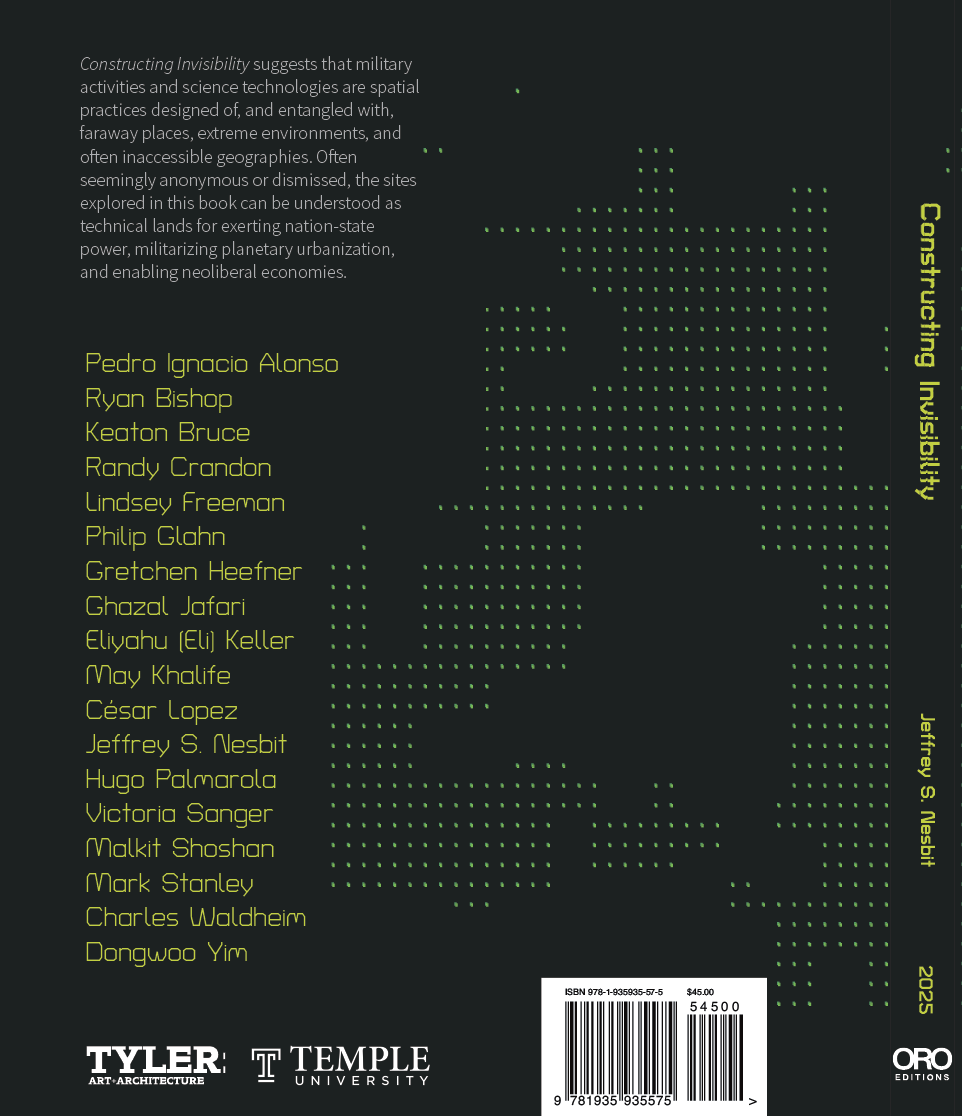
El capítulo de Hugo Palmarola y Pedro Alonso explora la historia de un telescopio modelo Maksutov, el que se convirtió en el Maksutov más grande construido por la Unión Soviética. Este instrumento fue instalado en 1967 en Chile, como parte de una misión científica liderada por la Academia de Ciencias de la Unión Soviética y el Observatorio Nacional de Púlkovo ubicado a las afueras de Moscú. El artículo argumenta que las instalaciones astronómicas soviéticas en Chile y en Latinoamérica no fueron impulsadas exclusivamente por preocupaciones científicas, tecnológicas o prácticas, sino por lógicas estratégicas asociadas con la geopolítica de la Guerra Fría y la Carrera Espacial entre la Unión Soviética y los Estados Unidos.
SOBRE EL LIBRO CONSTRUCTING INVISIBILITY
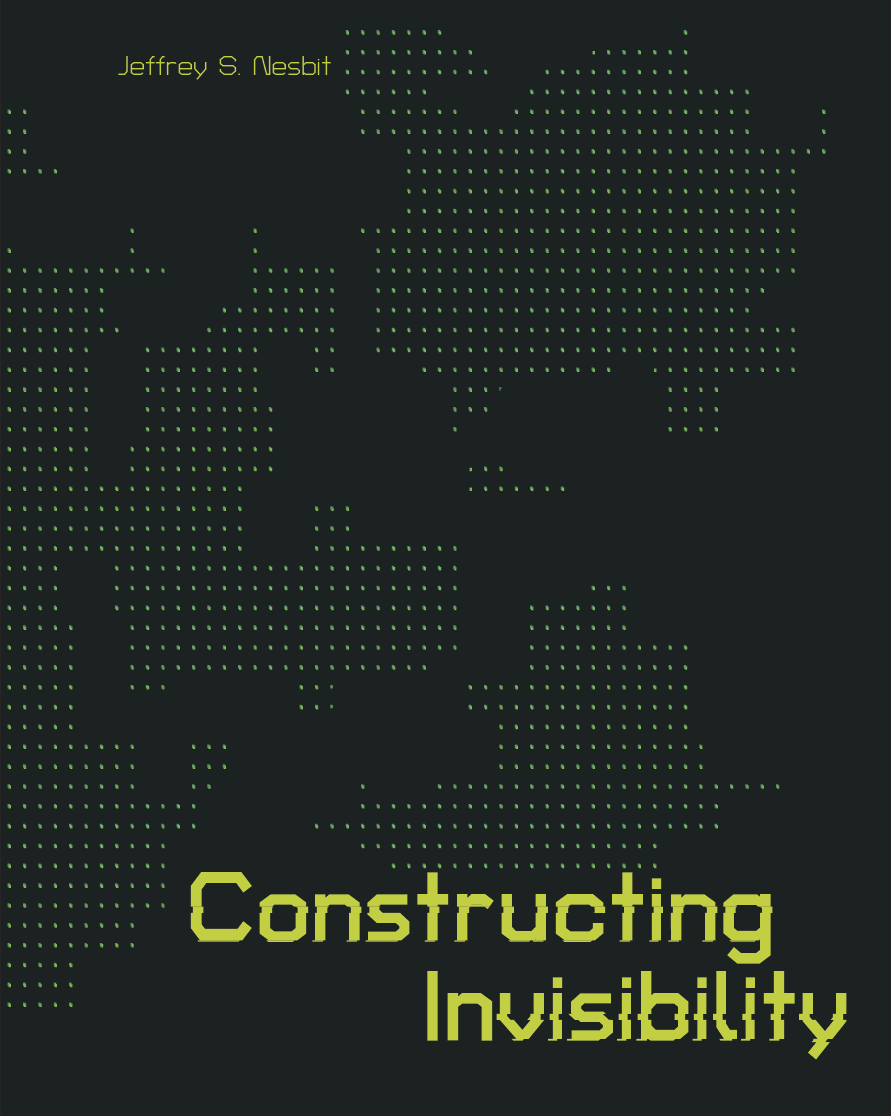
Today, designers, researchers, and scholars must responsibly engage the entangled networks and delineated systems far beyond boundaries of typical design practice to engage in thoughtful critique of the past and consider counter-imaginations of the future. Our discussion of the unseen begins first with an understanding of the power of sight. A look back at the technologies of control implicated in documenting the world reveals the closely intertwined evolution of imperial occupation and technological progress. Constructing Invisibility continues the exchanges initiated during the first symposium and builds upon the diversity of knowledge shared. The late French philosopher Bruno Latour reminds us that “politics has always been oriented toward objects, stakes, situations, material entities, bodies, landscapes, places. This is in effect the decisive discovery of political ecology: it is an object-oriented politics. Change the territories and you will also change the attitudes.” This issue uses these economies, landscapes, and places, including the boundless corporations and destructive climate realities, to better see the world. Further, the collection of essays seeks to understand how the construction of such sight impacts civilian occupation in the remaining world. Illuminating stories and places has become the aim of this volume, and shedding light on distant territories has become confounded by extremity, complexity, disparity, and secrecy.